

Smithville and Wellandport
Plumber in Smithville, Ontario
Floor drains backing up, frozen pipes, sump pumps and water heaters in Smithville and Wellandport, with a written price before any part is fitted.
Smithville plumbing and drains
What's in the walls of a Smithville house?
Smithville's houses went up in three waves, and each wave put different pipe in the ground. The older houses around Griffin Street often still have galvanized water lines and a clay sewer pipe under the front lawn. The streets north of Townline Road mostly run on copper and cast iron. The Northwest Quadrant is plastic pipe and a sump pump that has to work every time it rains. Smithville Plumbing works on all three, and on the rural properties out toward Wellandport.
Your tap water is Lake Ontario water, treated at the Region's Grimsby plant and piped through the Township's Smithville system. It's moderately hard, so scale builds up in water heaters and on faucet aerators over the years. Winters in this part of Niagara bring about 121 days with a low at or below freezing, which is enough to split a line on an outside wall or an outdoor tap left on.
Work is performed by licensed plumbers (306A Certificate of Qualification). You get a written price before any part is fitted, and a straight answer when a repair won't last. Tell us what the water is doing, by phone or through the quote form, and we'll set up the visit.
How can we help?
What you can count on
What can you count on when you call?
Licensed and insured
Every plumber holds a current 306A Certificate of Qualification and is covered by liability insurance. Your home is protected on every job.
Every call is answered
Day or night, a person or our receptionist answers, takes the details and a plumber calls you back.
Written price before work starts
You see the number and approve it before any part is fitted. No surprises on the invoice.
1-year workmanship warranty
All labour comes backed by a one-year warranty. If a repair we made fails within the warranty period, we return and fix it at no additional labour cost.
From Griffin Street to Northwest Quadrant
Which pipe is in your part of Smithville?
Smithville grew in three waves, and you can usually tell what's behind the walls from the street a house is on. Knowing that before we go down the basement stairs means we bring the right parts and know what to ask.
Village core, before the war
The houses around Griffin Street, St. Catharines Street, Station Street and College Street are the old village core, built before the Second World War.
Many still have galvanized steel water lines, a cast-iron stack and a clay sewer lateral, with a floor drain in the basement and no sump. Galvanized pipe rusts closed from the inside, so pressure upstairs fades, and roots work into the clay joints until the floor drain backs up. The plumber checks the pressure at a few taps, runs a camera down the lateral and shows you the footage before suggesting anything. If water has ever come up through your floor drain, ask about a backwater valve before the next heavy rain.
North of Townline Road, post-war
Most of Smithville's established streets north of Townline Road, around West Street and Colver Street, were built as the village grew through the post-war decades.
These houses usually have copper water lines, cast-iron or early ABS drains and a clay or early plastic lateral, with weeping tile tied to the sewer or a sump pit. With age, copper develops pinhole leaks, cast-iron stacks crack along their length and roots find the lateral joints. The plumber traces the leak, checks the stack and tells you plainly whether a patch will hold or a section should be replaced. If you spot a green crust or a damp patch on a copper line in the basement, look for a drip and book a repair.
Northwest Quadrant, newest homes
The Northwest Quadrant, including the Station Meadows West and Dunloe plans, is Smithville's newest housing.
The pipe here is PEX and PVC, and it rarely gives trouble. What fails is the sump pump: it lifts groundwater out of the pit and discharges it to the surface outside, often with no backup pump behind it. When it stops during a storm or a power cut, the basement takes the water. The plumber tests the pump and float, checks the discharge line and talks you through a battery backup. Before heavy rain, pour a bucket of water into the pit and watch the pump empty it; if it doesn't, book a look at your sump pump.
Water where it shouldn't be?
(365) 653-5232
Tell us what is leaking, frozen or backing up, and we'll tell you what to shut off while you wait for the plumber.
Call now- Before you callIf a pipe is leaking, close the main valve beside the water meter in the basement, and if the floor drain is backing up, stop running taps, the washer and the dishwasher.
- Written priceYou see the number and say yes before a part goes in.
- Licensed plumbersWork is performed by licensed plumbers (306A Certificate of Qualification).
Plumbing services
What is the water doing?
Start with what you're seeing, and we'll match it to the job.
- AEmergency plumberA burst or frozen pipe, sewage coming up through the floor drain, or a toilet that won't stop overflowing. We tell you what to shut off first, then a plumber comes to stop the water.
- BSump pumpsA pump that hums but won't empty the pit, runs constantly or has never been tested. We test it, replace it when it's worn out and add a battery backup for storms and power cuts.
- CSewer repair and backwater valvesRoots in a clay lateral or a drain that backs up every spring. We run a camera, show you the footage and explain where your side ends and the Township's begins.
- DDrain cleaningA slow sink, a tub that holds water or a floor drain that gurgles. We find out whether it's one fixture or the main line, and whether snaking it will hold.
- EPlumbing repairsLow pressure from galvanized pipe, pinhole leaks in copper, a running toilet, a dripping faucet or an outdoor tap that split over the winter. We fix it and tell you how long it should last.
- FWater heatersTank or tankless, electric or gas, sized to your household. Moderately hard water leaves scale, so we check for it before recommending anything. Gas work is performed by TSSA-certified gas technicians.
Tell us what's wrong and get a written price before any work starts.
Get a written quoteHow it works
How does a visit go?
- Step 1
Tell us what's happening
Call or use the form and describe what the water is doing. A plumber calls you back to go over it.
- Step 2
We find the cause
The plumber looks at the fixture and the pipe behind it, and runs a camera when the main line is involved.
- Step 3
You approve the price
You get the price in writing and decide before any part is fitted.
- Step 4
We do the work
We make the repair, test it with the water on and tell you what to keep an eye on.
Where we work
Is your house in Smithville, Wellandport or Smithville, Beamsville, Lincoln and St. Catharines?
Besides Smithville and Wellandport, we work in nearby Niagara towns.
Smithville Plumbing works across Smithville and in Wellandport, and in Beamsville, Lincoln and St. Catharines. Beamsville gets its water from the same Grimsby plant as Smithville, so the same scale turns up in its water heaters. Lincoln runs a pilot subsidy for sanitary backwater valves, aimed at homes with a history of basement flooding, and St. Catharines offers rebates of up to 90% of eligible costs for backwater valves and weeping tile disconnection on single-detached and semi-detached homes built before 2012.
Guides
What can you check yourself?
Short guides on drains, hard water and sump pumps, written for Smithville houses.
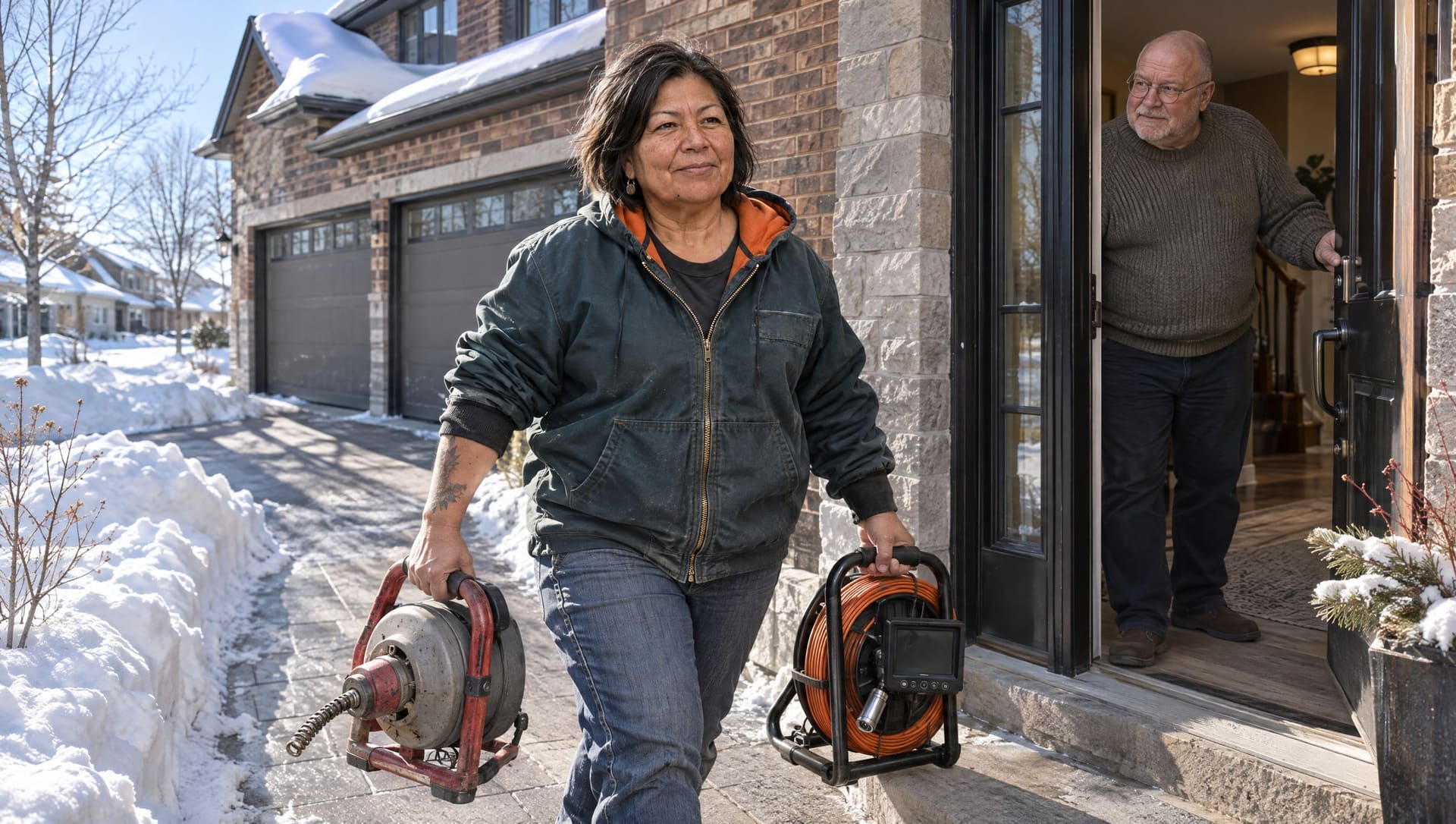
Do boiling water, salt, vinegar or baking soda clear drains?
What boiling water, salt, vinegar and baking soda do to a slow drain, what works better, and how to tell a sink clog from a problem in Smithville's older clay and cast-iron sewer lines.
Read the guide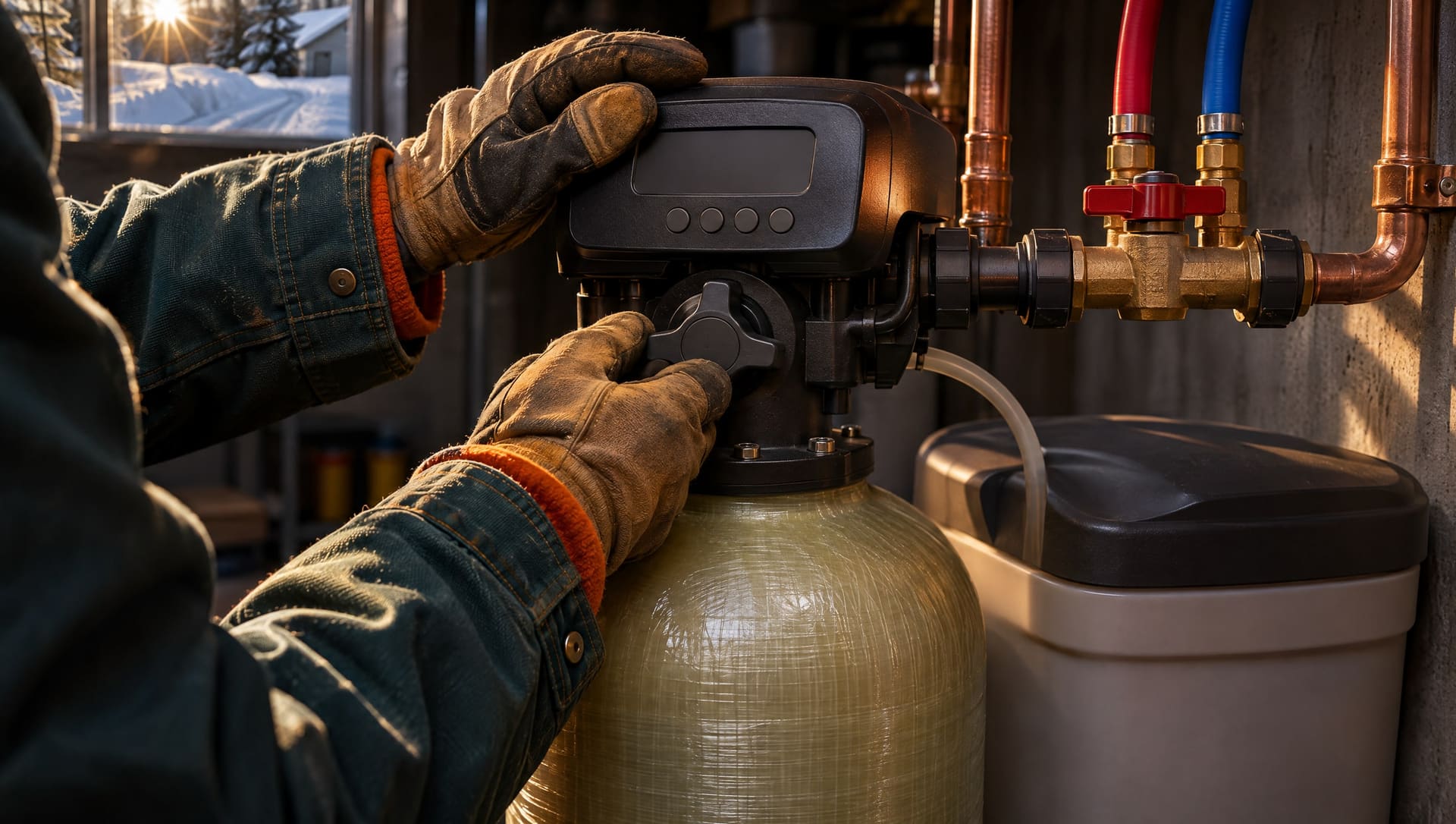
Smithville hard water: what a softener does, how to size it
Smithville's Lake Ontario tap water is moderately hard, at 113 mg/L. Here is what that does to your fixtures and water heater, what a softener changes, and how to work out the size your household needs.
Read the guide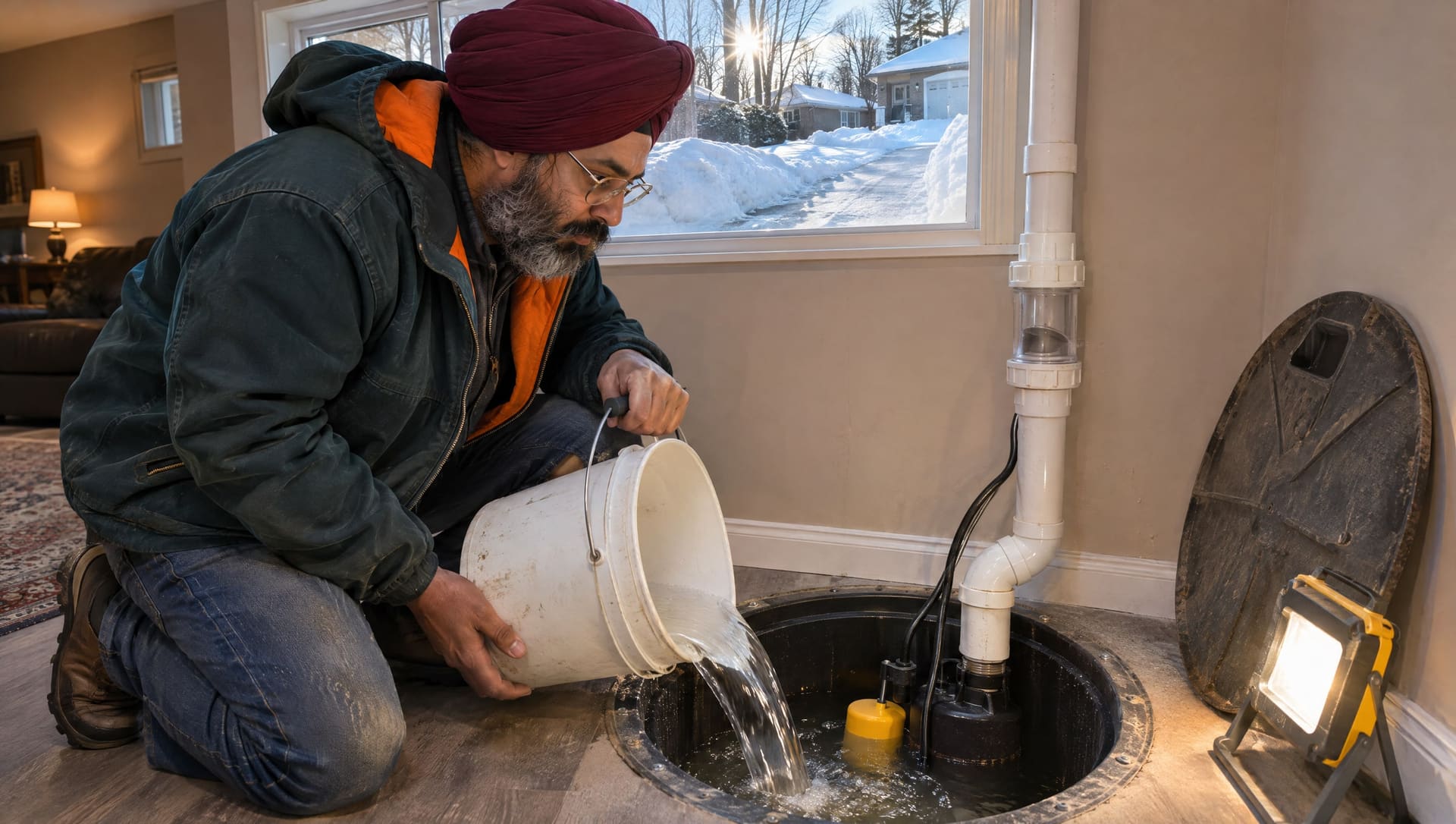
How a sump pump works, and how to test it before a storm
How the sump pump in a Smithville basement works, a test you can do yourself with a pail of water before heavy rain, and what to shut off and when to call if it fails mid-storm.
Read the guide
What is the water doing in your house?
Tell us by phone or through the form. You'll get a written price before any part is fitted.
Questions
What do Smithville homeowners ask?
A pipe has frozen in my Smithville house. What should I do first?
Niagara's climate normals show about 121 days a year with a low at or below 0 °C, and about 23 below -10 °C. In Smithville, pipes usually freeze on outside walls, in crawl spaces and on the line to an outdoor tap. If a tap gives nothing, shut the main valve where the water line enters the basement before the pipe thaws. A split pipe often only leaks once the ice melts. Open the tap that line feeds and warm the pipe gently with a hair dryer. Never use an open flame. If you see a split or a bulge, leave the main off and call an emergency plumber.
My basement flooded after heavy rain. Who should I tell in Smithville?
Tell the Township. After a week of heavy rain across Niagara, the Township of West Lincoln reported on August 6, 2026 that local impacts were fairly minimal. It asked residents whose properties or basements had flooded to report it. In your own house, note where the water came in. Water that came up through the floor drain points to the sewer. Water through the walls points to grading, weeping tile or the sump. Report the flooding to the Township, take photos for your insurer, then read about backwater valves.
Who is allowed to do plumbing work on a Smithville house, and does it need a permit?
Plumbing is a compulsory trade in Ontario. To do it, a person needs a Certificate of Qualification, a provisional certificate or a registered apprenticeship, and must appear on the Skilled Trades Ontario Public Register. Work is performed by licensed plumbers (306A Certificate of Qualification). Under the Building Code Act, 1992, new plumbing and changes to drains generally need a building permit. The Township of West Lincoln's building department can tell you whether your job does. Check the plumber's name on the public register before work starts, and see plumbing repairs.
Can I install or move a gas water heater in my Smithville house myself?
No. Under Ontario Regulation 212/01 (Gaseous Fuels), fuel-fired appliances such as gas water heaters must be installed and serviced by a registered gas contractor. That includes moving a heater, changing its venting or reconnecting the gas line after a tank swap. Gas work is performed by TSSA-certified gas technicians. If you smell gas near the heater, leave the house and call the gas utility from outside. If the heater is just old or slow to reheat, check the date on its label and look at the base for rust or water. Then read about water heaters.
Where does Smithville's water come from, and how hard is it?
Smithville's tap water comes from Lake Ontario. It is treated at Niagara Region's Grimsby Water Treatment Plant and delivered through the Township of West Lincoln's Smithville distribution system. Niagara Region lists its hardness at 113 mg/L, from a sample taken Oct. 5, 2026. That is moderately hard. It leaves white scale on taps and kettles, and over the years it builds sediment in the bottom of a water heater tank. Look for crust on your shower head and tap aerators, then read Hard water in Smithville: what a water softener does and how to size one.
Where does my side of the sewer end and the Township's begin?
Your sanitary lateral runs from the house to the sewer main under the street. The Township of West Lincoln's Public Works Department repairs the section from the property line to the main. The stretch between your house and the property line is yours. In Smithville's village core and on the older streets north of Townline Road, that pipe is often clay, and roots get in at the joints. A camera run down the line shows which side of the property line the problem is on. If your floor drain backs up, stop running water and book a camera inspection through sewer repair.
I live in an older house near Griffin Street. What usually goes wrong with the plumbing?
The houses on Griffin, St. Catharines, Station and College streets were built before the Second World War. Houses of that age typically had galvanized steel water lines, cast-iron stacks, a clay sewer lateral and a basement floor drain with no sump. Galvanized pipe rusts from the inside, so the pressure drops slowly until the upstairs shower is a trickle. Roots get into the clay lateral at the joints, and the floor drain is where a backup shows first. Run the top-floor shower and a basement tap together. If both are weak, the supply line is the likely cause. Then read about plumbing repairs.
Why can't a plumber give a firm price for a repair over the phone?
Because the same symptom can have very different causes. A slow basement drain in a post-war house off West Street could be a clogged trap, or roots in the clay lateral under the lawn. Low pressure near Griffin Street could be one blocked aerator, or a long run of galvanized pipe. The price depends on which pipe it is, how far it runs and how easy it is to reach. Smithville Plumbing looks first, then writes the price down, and nothing is fitted until you have approved it. Note what the water is doing and when it started, then ask for a written quote.